Please do confirmation for available items and price will changed without prior notice. For your information that not all shell could sending across abroad !!!


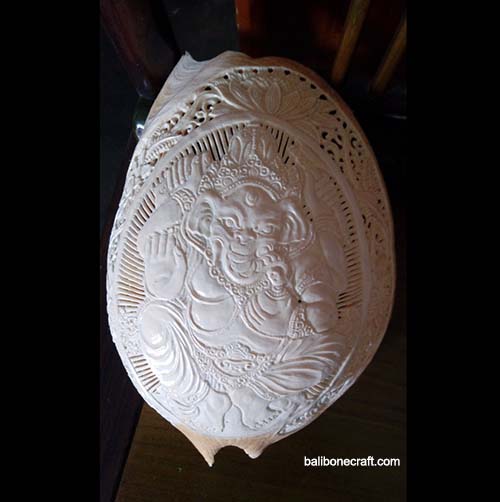


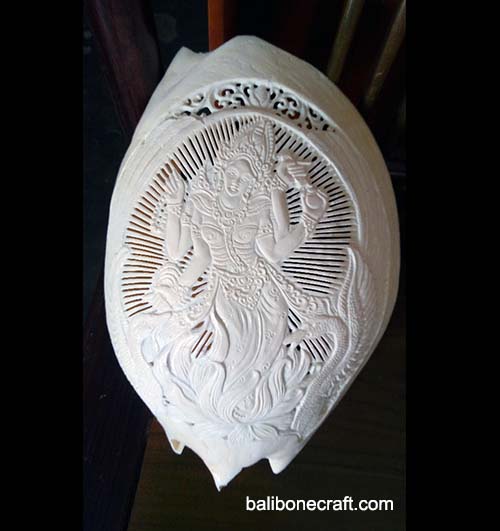


A SEA-SHELL
A seashell or sea shell, also known simply as a shell, is a hard, protective outer layer created by an animal that lives in the sea. The shell is part of the body of the animal. Empty seashells are often found washed up on beaches by beachcombers. The shells are empty because the animal has died and the soft parts have been eaten by another animal or have rotted out.
The term seashell usually refers to the exoskeleton of an invertebrate (an animal without a backbone). Most shells that are found on beaches are the shells of marine mollusks, partly because many of these shells endure better than other seashells.
Apart from mollusk shells, other shells that can be found on beaches are those of barnacles, horseshoe crabs and brachiopods. Marine annelid worms in the family Serpulidae create shells which are tubes made of calcium carbonate that are cemented onto other surfaces. The shells of sea urchins are called tests, and the moulted shells of crabs and lobsters are called exuviae. While most seashells are external, some cephalopods have internal shells.
Seashells have been used by humans for many different purposes throughout history and pre-history. However, seashells are not the only kind of shells; in various habitats, there are shells from freshwater animals such as freshwater mussels and freshwater snails, and shells of land snails.
NAUTILUS
A nautilus (from Latin nautilus ‘sails like a vessel’; from Ancient Greek ναυτίλος (nautílos) ‘seaman, sailor’)is any of the various species within the cephalopod family Nautilidae. This is the sole extant family of the infraorder Nautilaceae and the suborder Nautilina.
It comprises nine living species in two genera, the type of which is the genus Nautilus. Though it more specifically refers to the species Nautilus pompilius, the name chambered nautilus is also used for any of the Nautilidae. All are protected under CITES Appendix II.Depending on species, adult shell diameter is between 10 and 25 cm (4 and 10 inches).
The Nautilidae, both extant and extinct, are characterized by involute or more or less convoluted shells that are generally smooth, with compressed or depressed whorl sections, straight to sinuous sutures, and a tubular, generally central siphuncle. Having survived relatively unchanged for hundreds of millions of years, nautiluses represent the only living members of the subclass Nautiloidea, and are often considered “living fossils”.
Melo amphora – The Giant Bailer Shell
This is the second of two shells I found at a local antique shop. (The other is in my previous post) It is Melo amphora, which has several common names including, the Bailer Shell, the Melon Shell and the Diadem volute. The species is distributed from southern Indonesia to New Guinea, and around the northern half of Australia.
The shell can grow to a whopping 550mm in length. This one is more moderate in size at just over 300 mm or 12 inches. The animals are mostly active at night and bury themselves in sand during the day. Like all members of the Volutidae family, they are carnivorous and feed on other molluscs and marine invertebrates.