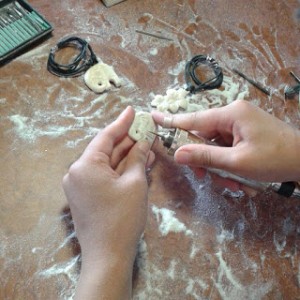
Shell carving is an ancient, intricate art form involving the meticulous cutting, shaping, and engraving of seashells—often conch, lightning whelk, or mother-of-pearl—using rotary tools like Dremels and diamond burrs. Artists create relief, inlay, and 3D sculptures.
Bubalus species comprise the domestic water buffalo (B. bubalis), the wild water buffalo (B. arnee), the tamaraw (B. mindorensis), the lowland anoa (B. depressicornis), and the mountainThe latter two anoa species were proposed to form a subgenus Anoa within Bubalus.
Tagua (pronounced TAG-WAH) is a seed from a palm-like tree that grows in the tropical rainforests of Ecuador, Colombia, and Brazil. Also known as the “vegetable ivory” because of its rich ivory color and shiny texture, Tagua discourages the use of actual ivory jewelry production.
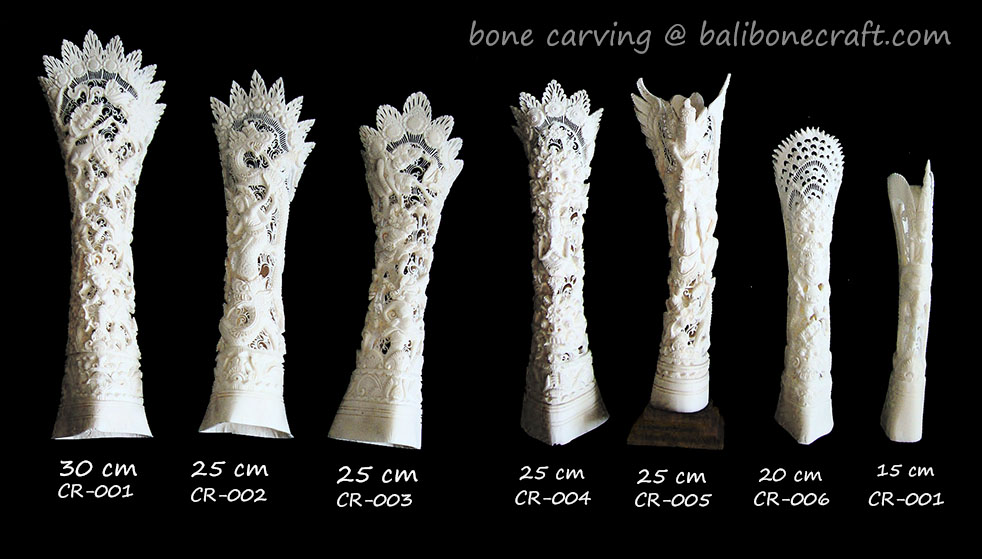
Welcome to BaliBoneCraft.com, a place to find the best bone carving products located in Bali. Our works specialize in carvings of animal bones and horns combine with various material such as wood, stone, silver, brass and metal. Beside bone we also use material such as: deer antelier, amber, crystal, horn of moose and tagua nut. Our workshop location in Ubud-Bali, Google Map @BaliBoneCraft or @BaliArtspace Studio. For question or inquiry, feel free to contact us by email balibonecraft@gmail.com / mobile +62817347036 (WhatsApp ready for quick response).
Bubalus species comprise the domestic water buffalo (B. bubalis), the wild water buffalo (B. arnee), the tamaraw (B. mindorensis), the lowland anoa (B. depressicornis), and the mountain.The latter two anoa species were proposed to form a subgenus Anoa within Bubalus. The water buffalo (Bubalus bubalis), also called domestic water buffalo, Asian water buffalo, and Asiatic water buffalo, is a large bovine originating in the Indian subcontinent and Southeast Asia. Today, it is also kept in Italy, the Balkans, Australia, the Americas, and some African countries. Two extant types of water buffalo are recognized, based on morphological and behavioural criteria: the river buffalo of the Indian subcontinent and further west to the Balkans, Egypt, and Italy; and the swamp buffalo from Assam in the west through Southeast Asia to the Yangtze Valley of China in the east. The wild water buffalo (Bubalus arnee) is most probably the ancestor of the domestic water buffalo.[3] Results of a phylogenetic study indicate that the river-type water buffalo probably originated in western India and was domesticated about 6,300 years ago, whereas the swamp-type originated independently from Mainland Southeast Asia and was domesticated about 3,000 to 7,000 years ago. Subsequently, the river buffalo dispersed west as far as Egypt, the Balkans, and Italy; while swamp buffalo dispersed to the rest of Southeast Asia and up to the Yangtze Valley.
SKULL SERIES
The skull, or cranium, is typically a bony enclosure around the brain of a vertebrate. In some fish and amphibians, the skull is of cartilage. The skull is at the head end of the vertebrate.
In a human, the skull comprises two prominent parts: the neurocranium and the facial skeleton, which evolved from the first pharyngeal arch. The skull forms the frontmost portion of the axial skeleton and is a product of cephalization and vesicular enlargement of the brain, with several special senses structures such as the eyes, ears, nose, tongue and, in fish, specialized tactile organs such as barbels near the mouth.
The skull is composed of three types of bone: cranial bones, facial bones and ossicles, which is made up of a number of fused flat and irregular bones. The cranial bones are joined at firm fibrous junctions called sutures and contains many foramina, fossae, processes, and sinuses. In zoology, the openings in the skull are called fenestrae, the most prominent of which is the foramen magnum, where the brainstem goes through to join the spinal cord. [ more » ]
JEWELRIES (PENDANTS , BEADS, PINS and NECKLACE)
JEWELRY is small decorative items worn for personal adornment, such as brooches, rings, necklaces, earrings, and bracelets. Jewelry may be attached to the body or the clothes, and the term is restricted to durable ornaments, excluding flowers for example. For many centuries metal, often combined with gemstones, has been the normal material for jewelry, but other materials such as shells and other plant materials may be used. [ more » ]
SHELL CARVING
sea shell carving produced by BaliBoneCraft.com
A seashell (or sea shell), also known simply as a shell, is a hard, protective outer layer usually created by an animal or organism that lives in the sea. Most seashells are made by mollusks, such as snails, clams, and oysters to protect their soft insides. Empty seashells are often found washed up on beaches by beachcombers. The shells are empty because the animal has died and the soft parts have decomposed or been eaten by another organism.
A seashell is usually the exoskeleton of an invertebrate (an animal without a backbone), and is typically composed of calcium carbonate or chitin. Most shells that are found on beaches are the shells of marine mollusks, partly because these shells are usually made of calcium carbonate, and endure better than shells made of chitin.
SMOKE PIPE
SMOKE PIPE MADE OF MOOSE HORN
A smoking pipe, often simply referred to as a pipe, is used to inhale (or taste) the smoke of a burning substance, typically (though not exclusively) used to consume a psychoactive substance; this most commonly refers to a tobacco pipe, however it can also refer to a cannabis pipe (bowl). Pipes are commonly made from briar, heather, corncob, meerschaum, clay, cherry, glass, porcelain, ebonite and acrylic. During the 17th century, pipe smoking became a new trend among the Dutch young, in specific the upper and middle class students.These students copied the Spanish sailors and soldiers in the area by joining them in participation of pipe smoking. In particular they were interested in the novelty it brought, which was the taste of smoke. However, the only way to smoke tobacco was through a pipe. Popularity grew throughout and became a mainstream habit for the Dutch during this time. “In a relatively short period of time, from 1590 to 1650, the Dutch Republic had gone from being a country of non-smokers to being a tobaccophile of Europe.”Typically, these young folk did their smoking in smoking rooms or parlors, also known as “tobacco houses.”They smoked for social habit, usually with other smokers. “It took more than a century for this new practice to come into fashion.”The popularity of pipes grew interest in artists. Although pipes has once been associated with the lower class, it turned into a symbol of prestige and vanity. Images of pipes could be found in numerous painting during the time. [ more » ]
SCULPTURE
DRAGON SCULPTURE carved by experienced artisan produced by BaliBoneCraft.com
SCULPTURE is the branch of the visual arts that operates in three dimensions and one of the plastic arts. Durable sculptural process originally used carving (the removal of material) and modelling (the addition of material, as clay), in stone, metal, ceramics, wood and other materials but, since modernism, shifts in sculptural process led to an almost complete freedom of materials and process. [ more »]
DRAGONS SERIES
New series in our web-page is DRAGONS SERIES made from various material become pendant or beautiful carving.
A dragon is a legendary creature, typically scaled or fire-spewing and with serpentine, reptilian or avian traits, that features in the myths of many cultures around world.
The European dragon, derived from European folk traditions and ultimately related to Balkans and Western Asian mythologies. Most are depicted as reptilian creatures with animal-level intelligence, and are uniquely six-limbed (four legs and a separate set of wings).
CARVING MATERIAL : TAGUA NUT
The Chinese dragon, with counterparts in Japan (namely the Japanese dragon), Korea and other East Asian and South Asian countries. Most are depicted as serpentine creatures with above-average intelligence, and are quadrupeds (four legs and wingless).
The two traditions may have evolved separately, but have influenced each other to a certain extent, particularly with the cross-cultural contact of recent centuries. The English word dragon and Latin word draco derives from Greek δράκων (drákōn), “dragon, serpent of huge size, water-snake”. more »
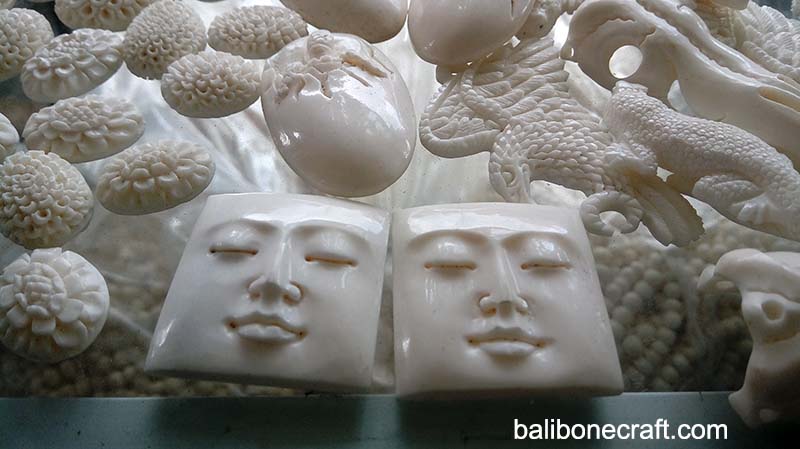
BONE MATERIAL
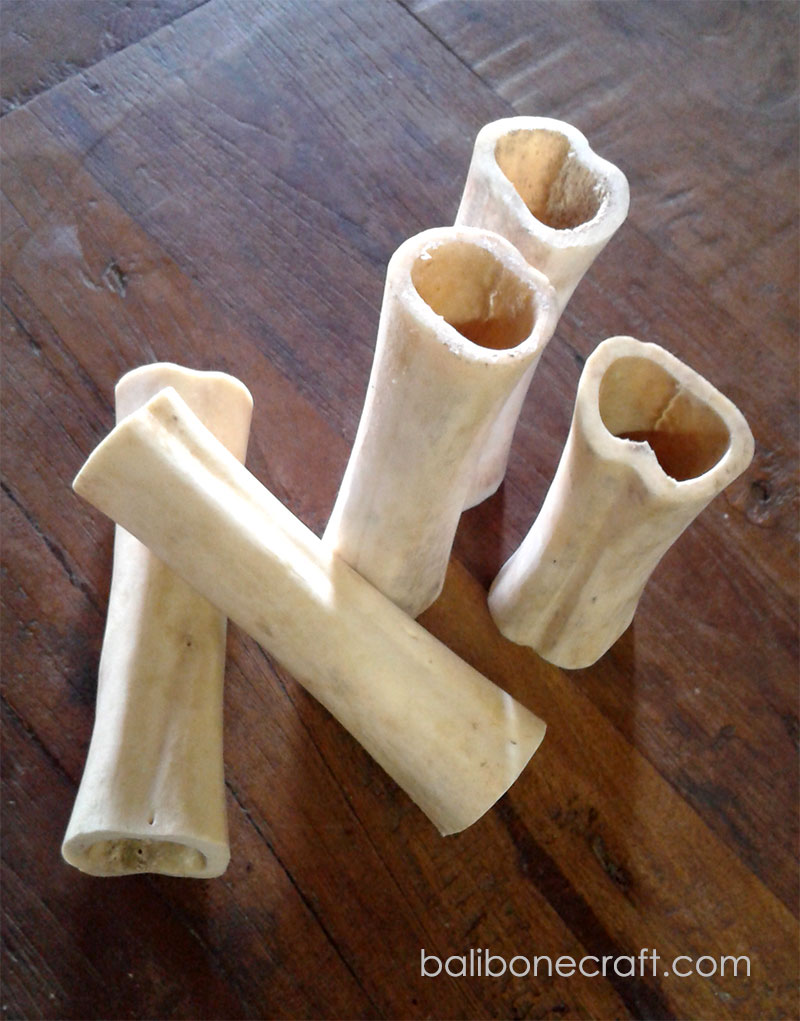
A bone is a rigid organ that constitutes part of the vertebral skeleton. Bones support and protect the various organs of the body, produce red and white blood cells, store minerals and also enable mobility. Bone tissue is a type of dense connective tissue. Bones come in a variety of shapes and sizes and have a complex internal and external structure. They are lightweight yet strong and hard, and serve multiple functions. Mineralized osseous tissue or bone tissue, is of two types – cortical and cancellous and gives it rigidity and a coral-like three-dimensional internal structure. Other types of tissue found in bones include marrow, endosteum, periosteum,nerves, blood vessels and cartilage.
Bone is an active tissue composed of different cells. Osteoblasts are involved in the creation and mineralisation of bone; osteocytesand osteoclasts are involved in the re-absorption of bone tissue. The mineralised matrix of bone tissue has an organic component mainly of collagen and an inorganic component of bone mineral made up of various salts. We use animal bones such as buffalo bone, cow bone, goat bone also fish bone we got from around Indonesia.
In the human body at birth, there are over 270 bones, but many of these fuse together during development, leaving a total of 206 separate bones in the adult, not counting numerous small sesamoid bones. The largest bone in the body is the thigh-bone (femur) and the smallest is the stapes in the middle ear. more »
BORNEO STYLE
Here of BORNEO STYLE made of animal bones
Internationally, the island is known as Borneo, a name derived from European contact with the Brunei kingdom in the 16th century, during the Age of Exploration. On a map from around 1601, Brunei city is referred to as Borneo, and the whole island is also labelled Borneo. The name may derive from the Sanskrit word váruṇa, meaning either “water” or Varuna, the Hindu god of rain and oceans.
In 977, Chinese records began to use the term Bo-ni to refer to Borneo. In 1225, it was also mentioned by the Chinese official Chau Ju-Kua. In modern Chinese, the island is called (simplified Chinese; pinyin: Póluó Zhōu), the first two characters being phonetic and the third referring to a large landmass.
BONE CARVING CLASS
BONE CARVING CLASS
Carving is the act of using tools to shape something from a material by scraping away portions of that material. The technique can be applied to any material that is solid enough to hold a form even when pieces have been removed from it, and yet soft enough for portions to be scraped away with available tools. Carving, as a means for making stone or wooden sculpture, is distinct from methods using soft and malleable materials like clay, fruit, and melted glass, which may be shaped into the desired forms while soft and then harden into that form. Carving tends to require much more work than methods using malleable materials
We open class for bone carving direct with our expert artisan. For details please contact our admin or visit. bone carving class
One unique product from Bali is Bone carving (Ukiran tulang dari Bali) more »
IMPORTANT !!!
Please note that if you are going to bring bone carving out of Indonesia, you will need a verification from BKSDA. Not all bone carvings can be brought abroad. There are several requirements that must be fulfill if you want sent or bring it. For details please contact admin. more »
BKSDA adalah : Balai Konservasi Sumber Daya Alam, sering disingkat sebagai Balai KSDA atau BKSDA, adalah unit pelaksana teknis setingkat eselon III (atau eselon II untuk balai besar) di bawah Direktorat Jenderal Perlindungan Hutan dan Konservasi Alam Kementerian Kehutanan Republik Indonesia. Instansi ini di antaranya bertugas untuk mengelola kawasan-kawasan konservasi, khususnya hutan-hutan suaka alam (suaka margasatwa, cagar alam) dan taman wisata alam.
For wholesale we provide catalogue, please chat by whatsapp +62817347036
Thank you for visiting our website. Keep in touch, feel free to contact us for question and inquiry.
Best Regards BaliBoneCraft.com +62817347036 (quick response by whatsapp)